

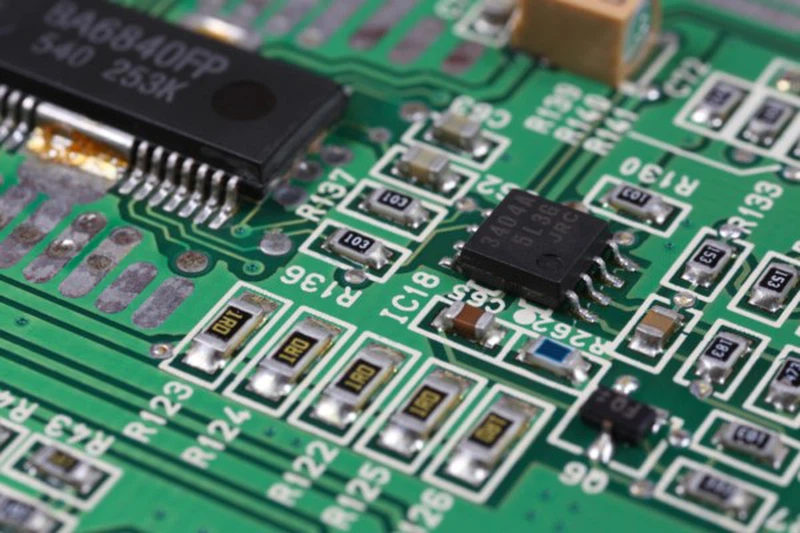
Through-hole PCB (Printed Circuit Board) technology involves inserting electronic component leads into plated holes on the board and soldering them for secure connections. While Surface Mount Technology (SMT) has become increasingly popular, through-hole PCB maintains distinct advantages in certain applications.
1. Types of Components
-
Axial Components: Leads extend from both ends of the component and must be inserted into positions on both sides of the PCB.
-
Radial Components: Leads extend from the same side of the component, usually shorter, with more concentrated placement locations.
2. Through-Hole PCB Assembly Process
-
Design and Prototyping: The circuit is designed and PCB layouts are created. Prototypes are then manufactured to ensure accuracy and feasibility.
-
Drilling: Holes are drilled in the PCB based on design requirements, suitable for single-layer or multi-layer boards.
-
Plating: Copper is plated inside the holes to connect component leads with internal PCB traces, ensuring proper electrical connection.
-
Component Insertion: Leads are inserted manually or by automated equipment.
-
Soldering: Wave soldering or manual soldering is used to secure component leads to the PCB for reliable connections.
-
Testing and Inspection: Functional and electrical testing is conducted to ensure all connections are stable and components operate correctly.
3. Advantages and Disadvantages of Through-Hole PCB
Advantages
-
Strength and Reliability: Leads pass through the PCB and are soldered on the opposite side, providing stronger connections than SMT, especially in applications requiring mechanical stress resistance, such as industrial and automotive electronics.
-
High Temperature and Voltage Tolerance: Performs well in harsh environments, handling high temperatures and voltages, making it suitable for military and aerospace applications.
-
Suitable for High-Power Circuits: Ideal for high-power components like power modules and transformers, as leads provide strong electrical connection and heat dissipation.
-
Reliable Electrical Connections: Leads soldered across multiple layers ensure stable electrical connectivity, reducing failures over time and improving circuit reliability.
-
Easy Manual Assembly and Repair: Components are easier to solder, replace, and repair manually, making through-hole PCB suitable for electronics requiring frequent maintenance.
-
Ideal for Prototyping and Small Batch Production: Easier assembly allows engineers to quickly test and modify designs, making it preferable for prototypes and small-scale production.
Disadvantages
-
Limited Density: Through-hole components occupy more space than SMT, limiting circuit density and making it unsuitable for compact modern electronics.
-
Higher Manufacturing Costs: The process is more complex, especially drilling and plating for multi-layer boards, increasing production time and costs.
-
Challenging Automation: Though automation has improved, through-hole soldering is difficult to fully automate. Compared with SMT, it requires more labor or sophisticated machinery, reducing production efficiency.
4. Applications of Through-Hole PCB
Although through-hole technology has been largely replaced by SMT in consumer electronics, it remains crucial in applications requiring robust electrical connections and mechanical stability, such as:
-
Industrial Equipment: Industrial PCBs often face higher power, temperature, and mechanical stress. Through-hole PCBs, with their strong connections and heat dissipation, are widely used in power supplies, controllers, and inverters.
-
High-Power Circuits and Connectors: Ideal for high-current and high-power circuits. Connectors that are frequently plugged and unplugged often use through-hole soldering for long-term stability and reliability.
-
Prototyping and Testing: Through-hole PCBs are preferred for product development and testing due to their easy handling, adjustment, and repair, making them ideal for developers.
As a professional electronic manufacturing service provider with over 20 years of experience, whether SMT or through-hole PCB, Bac Ninh Chemicals can deliver optimal solutions for various applications. We utilize advanced equipment and finishing technology, ensuring seamless integration of technology with customer requirements, achieving the highest standards for every project.